Stepping into a hot tub showroom feels a bit like touring a tiny, shimmering city. Jets whisper from display spas, LED lights glow in confident blues and purples, and a subtle scent of cedar or ozone drifts through the air. If you are searching “Hot tubs store near me,” and find yourself headed to Winnipeg Hot Tubs for the first time, the experience can be equal parts thrilling and bewildering. Rows of models look similar until you sit in them and realize how wildly different they feel. Salespeople ask questions you weren’t ready for. And somewhere between the lounge seat and the lounger debate, you realize the tub is the easy part. It is the preparation, the install, and the ownership rhythm that decide whether you end up with a sanctuary or a source of regrets.
I have walked customers through this dance for years. I have seen couples settle debates with a 20 minute wet test, watched people choose the right spa because the foot dome fit them just so, and helped cranky backyards transform into welcoming retreats through a well placed corner tub. The first visit sets the tone. Here is how to get the most from it, what matters, and what to ignore.
How showrooms are laid out, and why it helps to wander
Most Winnipeg Hot Tubs showrooms divide their floor into three natural zones. Entry level tubs sit near the front. These models focus on essentials, reliable circulation, and fewer bells and whistles. Mid tier tubs occupy the middle of the floor with a broader mix of seats, stronger jets, and better insulation. Premium models anchor the far wall, showing off whisper quiet pumps, complex hydrotherapy arrays, thicker covers, and advanced controls. Some stores keep a few tubs filled and hot, tucked off to the side for wet tests. Keep an eye out for a staff door leading to a service counter; that is where you will find the technicians and parts shelves, an important sign the dealership services what it sells.
You should not rush. Slide into seats, even with your street clothes. If staff offer you permission, swing your legs over the lounge seats too. Sit upright. Lean back. Take note of whether your heels touch the footwell floor or dangle. Check the distance from the back of your knees to the edge of the seat. The right fit shows itself the same way a good chair does, only warmer and friendlier.
The questions you will be asked, and the answers you should prepare
Any reputable staffer will start with questions before talking models. Think of this as the intake at a good clinic. The answers set your budget, installation timeline, and long term happiness.
They will ask how many people use the tub regularly. Be honest. If three people will soak more than once a week, you want at least four comfortable upright seats with varied depths. If it is mostly you and a partner, a compact three seater might deliver a better fit and easier maintenance.
They will ask why you want the spa. Hydrotherapy for a cranky lower back and shoulders leads you toward stronger pumps, targeted jets, and adjustable neck pillows. Quiet evening soaks under the stars, with minimal energy costs, point you toward thicker insulation, a heavy cover, and two speed pumps that sip electricity in Winnipeg winters.
They will ask about the installation site. Bring photos of the yard from a few angles. Measure the gate width, any tight corners from street to pad, and overhead clearances. If you have a deck, get the joist size, spacing, and span. Do not guess. A water filled spa is heavy. A mid sized, seven foot square tub with water and people can sit in the 3,000 to 4,500 kilogram range. Deck safety is non negotiable.
They will ask about power. Many tubs can run on 120 volts at first, but Winnipeg winters will test that. For reliable heating and performance in January, plan on a 240 volt circuit with a GFCI disconnect within sight and at the proper distance. If you do not know your panel capacity, say so. Good showrooms coordinate with electricians.
Finally, they will ask how much you want to invest, and over what time frame. It is perfectly reasonable to say you prefer durability and low operating costs over speaker packages, or that you want a comfortable hydrotherapy lounger more than a waterfall feature. The better you prioritize, the less you pay for features you will not use.
The awkward but essential sit test
You cannot judge a spa from the brochure any more than you can judge a mattress. Climb in. Some seats hug your ribs with firm contours, others feel open and floaty. Note whether the waterline, when filled, will sit at your shoulders in the deeper corner seats. If your legs float up in a lounge seat when you lean back, that lounger may not work for you unless it has good foot braces. An upright captain’s chair with a wrist jet might make you grin the moment you find it.
Here is what to feel for: lower back support that lets your pelvis relax, neck jets that hit the sides of your neck rather than the back of your skull, and footwell space that does not crowd people’s ankles. If you have sensitive knees or a history of IT band tightness, try a seat with a jet pattern that tracks outside the thigh, not directly across the kneecap. If a model has diverter valves, turn them with the salesperson’s permission, then sit again. You want adjustability without a confusing maze of settings.
If the store offers a wet test, take it. Bring a swimsuit and a towel. Ten minutes sitting in heated water reveals what an hour on dry acrylic cannot. Pay attention to pump noise with the cover closed and open. Ask the staff to cycle through a high and low pump setting and move a diverter. You are listening for a smooth ramp up, no chatter in the plumbing, and no rattling cabinet panels. Some hum is normal. Vibration is not.
New versus used, floor models versus special order
Not every buyer thinks brand new. A good Winnipeg Hot Tubs dealership often has trade ins that have been inspected, repaired where needed, and fitted with new covers. You will save a chunk of money, but you will also lose some of the warranty duration and you may inherit a model with fewer insulation layers than a current equivalent. If you buy used, ask to see the spa filled and heated in the store or, at minimum, get a wet test and a documented pressure test of the plumbing. Ask for photos of the heater element and check the pump label dates.
Floor models give you a price break without the uncertainties of a full used spa. These have been gently sat in and maybe filled for short demo periods. The advantage is immediate delivery and a discount. The trade off is fewer choices on color combos, since you are taking the one on the floor.
Special order takes longer. If you care about cabinet finish, shell color, or a specific jet package, this is the route. In summer, expect four to eight weeks for delivery. In peak fall buying season, a popular line might run longer. Build in time for your electrical work and pad pour or deck work, and your frustration level will stay low.
Winnipeg’s climate changes the math
A hot tub in Winnipeg is not the same as a hot tub in Kelowna or Austin. Cold chews at the weak points. R values matter more here than almost anywhere. Insulation design differs among manufacturers. Full foam tubs fill the cabinet void with foam, trapping heat from the pumps and stabilizing plumbing. Perimeter insulated tubs leave the plumbing accessible, with panels backed by thick thermal barriers and reflective surfaces.
I have owned and serviced both. Full foam holds heat exceptionally well in deep winter, and the cabinet doubles as a sound deadener. Repairs can cost more because you cut and replace foam to reach leaks. Perimeter systems can be easier to service and still efficient if they wrap the cabinet tightly and capture pump waste heat properly. Ask to see a cabinet panel off. You want to see continuous insulation, not gaps. Ask for real world operating costs from local customers. A mid sized, well insulated tub in Winnipeg, kept around 38 to 40 degrees Celsius, often falls in the 30 to 60 dollars per month range across the year. Bitter January weeks will spike higher. Poor covers and wind exposure push that number up fast.
The cover matters. A 4 to 2 inch tapered, high density foam cover with a continuous hinge seal can save you hundreds of dollars over a winter compared to a loose, waterlogged lid. Lift systems also change the equation by reducing the urge to crack the cover and leave it venting heat while you debate getting in. If the store offers a heavy duty cover upgrade with higher foam density and better vapor barrier, look hard at it. Winnipeg weather will pay you back.
Water care without the guesswork
There is no single chemical program that pleases every owner, but there are patterns. If sensitive skin runs in your family, a low chlorine system with an ozone or UV secondary sanitizer feels better and works reliably at residential bather loads. If you entertain often, a standard chlorine or bromine program gives you more headroom when the spa sees five people on a Saturday night.
The showroom staff should walk you through three things. First, water balancing for our municipal water. Winnipeg water is generally soft to moderately hard, but it can vary by neighborhood and season. Low calcium can foam and etch acrylic, high calcium creates scale on heaters and jets. Aim for a calcium hardness in the 150 to 250 ppm range for most tubs, adjusted for your manufacturer’s guidance. Second, pH and alkalinity. Keep pH around 7.4 to 7.6, with total alkalinity in the 80 to 120 ppm band, so your sanitizer works without chewing through your cover. Third, routine. A weekly schedule beats heroic monthly corrections every time. Ten minutes on Sunday beats an hour of fixing green water on Friday before guests arrive.
Filters do more than catch leaves. They trap tiny organic particles that otherwise become sanitizer demand. Rinse them every two to four weeks with a hose, rotate spares, and give them a proper chemical soak every three months. If a salesperson cannot show you the filter location, removal method, and sizing, that is a yellow flag. Accessibility matters because you will do this often.
Jets: power is nothing without placement
People love to count jets, as if more holes equals a better soak. It is a little like counting speaker drivers without checking the crossover or cabinet. What matters is pump horsepower at realistic amperage, plumbing diameter, and how many jets share a line. A small number of well fed jets beats a crowded manifold where water trickles.
Sit in a seat with the pumps on high and test the air control valve for that seat. Air mixing increases the massage feel without adding horsepower, but too much air can chill the water in winter and make the jet feel prickly. Good seats let you blend to taste. Check whether the diverter that feeds your favorite seat also starves another seat you care about. Families often argue when the best seat works only if someone else’s jets fade to a whisper.
Variety counts. A rotating jet at the lower back can feel great for 10 minutes but annoying after 30. Fixed point jets across the mid back, with a bigger diameter jet at the sacrum, create a steadier massage. A foot dome can be bliss or a shin bruiser depending on spacing. If two people will sit opposite each other often, make sure their calves do not collide around the dome.
The install is half the purchase
You can pick the perfect spa and still lose the plot on install day. Winnipeg back lanes can be narrow. Overhead lines wait for inattentive crane operators. A deck that felt solid with a picnic table may sing a sad song under 3,500 kilograms of hot water and people shifting weight.
Showroom staff should walk you through delivery logistics. The typical route is a spa dolly or sled through the side yard. If a corner is too tight, a small crane or picker truck lifts over a fence. That adds cost, usually a few hundred dollars up to a couple thousand if access is complex. Budget for it upfront so you are not negotiating with gravity on delivery day.
Your base matters. A concrete pad, 10 to 15 centimeters thick, reinforced and level, is the gold standard. Patio stones over a properly compacted base work for many mid sized tubs, but you must get compaction right and check level. A spa wants uniform support. High points push into the shell over time and can cause stress cracks. For decks, ask a structural person to do the math. If your deck is close to grade on screw piles with short spans, the answer may be a simple block of extra joists and beams. Elevated decks need engineering.
Electrical should be scheduled as soon as you know your delivery window. A licensed electrician installs the GFCI breaker and outdoor disconnect, runs the cable in conduit, and lands the connections per manufacturer instructions. Ask the salesperson if the heater is convertible and whether a 40 amp or 50 amp feed is best for full functionality in winter. In this climate, undersizing is false economy.
What a good warranty looks like
Warranties are not equal, and the real test comes two winters from now when a pump seal fails on a weeknight. Look for a shell structure warranty measured in years, not months. Five to ten years is common on quality brands. Surface finish warranties cover cracking or blistering for a shorter window. Equipment warranties on pumps and control packs often run one to three years, sometimes more. Read the exclusions. Some brands pro rate replacement parts after a year. Some cover labor only for year one.
More important than the paper is the service department. Does the dealership employ technicians, or do they call a contractor who happens to work on spas? Walk to the parts counter. If you see heaters, circuit boards, pump seals, and union o-rings on a shelf, you are in good hands. If all you see are brochures, you may wait two weeks for a part during cold season.
How pricing really works, and where to find value
Sticker price is a starting point. The total cost includes delivery, cover lifter, steps, startup chemicals, and sometimes a matching set of filters. Ask what is bundled. If the lifter is an optional add on, weigh which style fits your space. A side mount lifter needs space behind the tub. A compact upright lifter keeps the cover vertical, which helps in tight yards and blocks wind while you soak.
Do not fixate on a sale tag found online with a flashing banner. Ask the staff what the out the door number is for your situation, including crane if needed. Then ask about upcoming truckloads or floor model events. Sometimes you save the same money by being flexible on color, without sacrificing the insulation package or jet layout that matters more long term.
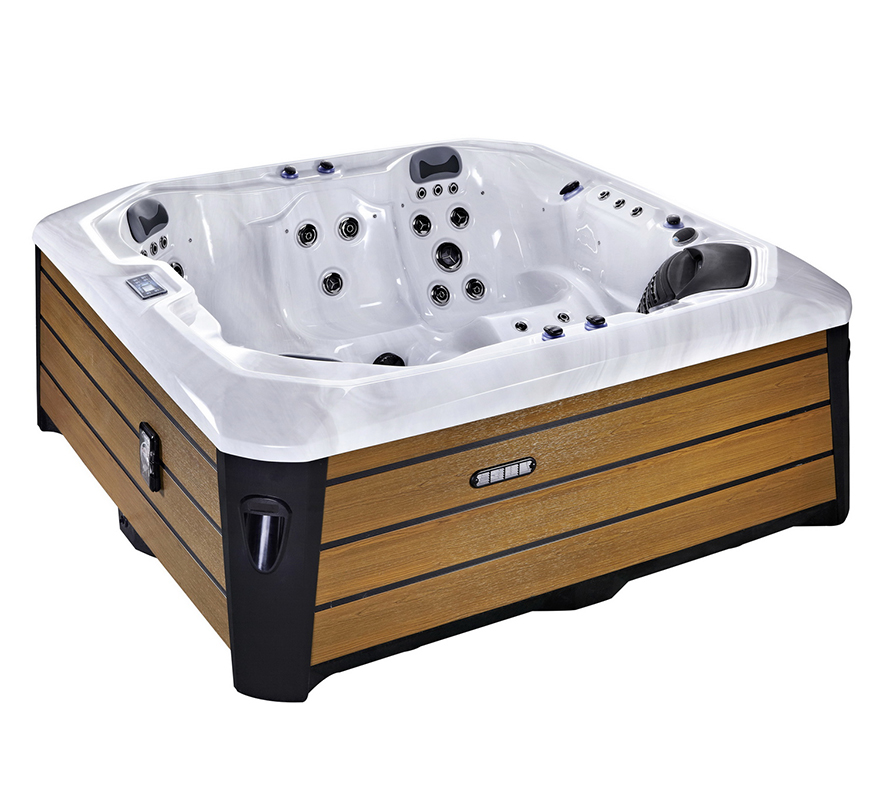
Avoid buying a speaker package you will not use. Outdoor Bluetooth speakers exist for a reason, and when built in spa speakers age in a harsh climate, replacement costs sting. Spend that money on a better cover or an extra filter set so you always have a clean cartridge ready. If you soak year round, a simple windbreak screen or pergola panel can improve comfort more than any LED light strip.
Common mistakes first time buyers make
People love big lounge seats. Then they discover no one uses them because they float. Or they discover their favorite upright seat gets weak when the diverter feeds a waterfall. Another common trap is energy blindness. Winnipeg winters punish thin cabinets and cheap covers, and your monthly bill serves as a reminder for years.
Do not under size. Buying a compact two seater to save money only to find your teenagers and their friends taking over makes the spa a point of friction. On the flip side, do not over size beyond your usage. If it is just two of you most nights, a seven seat party tub with a giant foot dome does not make you more social. It just means more water to heat and treat.
Skimping on electrical is another mistake. Trying to run a large tub on 120 volts in deep winter leads to a tub that cannot keep up when the jets run. It is not Swim and Spas a failure of the tub so much as a mismatch with the climate.
What happens after you buy
The best part of walking into Winnipeg Hot Tubs is walking out with confidence. Delivery day should come with a checklist and a face you recognize from the showroom. Expect the crew to place the tub, level it within reason, attach the cover lifter, and talk you through the first fill. If your electrician is on site, they will coordinate the startup after the tub fills to the correct waterline. If not, the crew should give you straightforward steps to power on safely.
Your first week sets habits. Balance the water after the first heat up, not before. Heat changes pH, and adjusting twice is a waste. Take five minutes to label diverters and air controls with a subtle dot of marker or a tiny adhesive. You think you will remember which knob feeds the lounge. You will not. Keep the manual handy in a zip bag near the disconnect.
The store should invite you back with a water sample. Good dealers test water for customers, free or cheap, and provide dosing instructions based on your sanitizer choice and usage. This is where a store earns loyalty. If they help you dial in your water and answer questions, you will send your neighbors their way when they search for Hot tubs for sale.
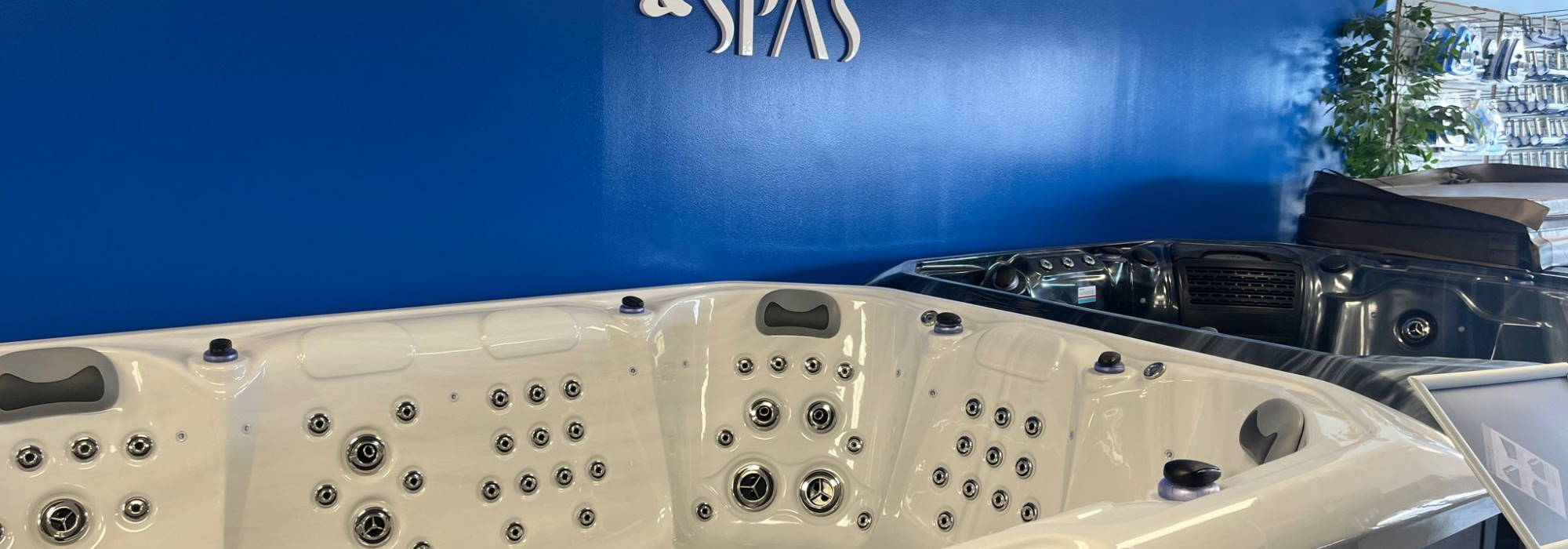
The vibe in a good showroom
A great showroom feels calm. No one pounces when you walk in. Staff know when to step back and let you sit quietly in a seat, eyes closed, picturing a February evening after shoveling. They care about how you plan to use the tub. They ask your height before pushing a lounge model. They know the difference between a programmable circulation pump and a two speed main pump running low for filtration, and they can explain it without jargon. They do not bad mouth every competitor, because they know their service reputation does the talking.
If you want to test that vibe, ask a simple question with a technical hinge. Something like, if we place the spa near a north fence, do you recommend extra skirting, or is the cabinet tight enough to handle wind? Do they give you a real answer, with a reasoned explanation about wind chill effects on covers and cabinet leakage paths? That is your dealership.
A quick pre visit checklist
Use this to show up prepared and save yourself a second trip for measurements.
- Photos of the backyard, gate, and path from driveway to install location, plus rough measurements of gate width and any tight corners. Electrical panel photo, and the distance from panel to spa site, even if approximate. Who uses the spa most often, and their heights. If anyone has specific aches to address, note them. Winter priorities: energy efficiency, quiet operation, or intense massage. Rank them. A realistic budget range that includes install items like pad, electrical, and a cover lifter.
If you are comparing multiple “Hot tubs store near me” options
Winnipeg has a healthy set of retailers, and a few minutes of in person comparison tells you more than hours online. Focus on service departments and insulation quality. Sit in comparable models at each store. Ask about parts availability and how warranty calls are handled in February. Look for a store that stocks covers, filters, and common valves so you are not left waiting. If they can name the exact cover size and foam density without flipping a binder, they live this stuff.
Price matters, but a couple hundred dollars either way, amortized over 8 to 12 years, is noise compared to a month of downtime when a control board fails and nobody calls you back. Choose the place you trust to answer the phone.
Final thoughts from the wet side
The best hot tub is the one that you use three nights a week, in silence or laughing with a friend, forgetting your phone inside. Shoppers sometimes chase a perfect spec sheet and miss the part where water feels different when it flows through a well designed seat at the right angle for your back. They fixate on a waterfall, then realize they never turn it on because they like the stars reflected on calm water. They buy a speaker package, then discover winter’s hush beats any playlist.

Your first visit to Winnipeg Hot Tubs should be playful and practical at the same time. Sit in as many seats as they will let you try. Ask the staff to lift a cabinet panel and show you insulation. Touch the cover and feel if it is dense or spongy. Make peace with the fact that a 240 volt line is the grown up choice here. Choose water care you can live with on a sleepy Sunday evening, not the heroic routine you imagine you will keep up. If a model makes you smile the second you sit in it, and the service department looks like it could rebuild a tub in a blizzard, you have found your match.
When you finally soak on that first cold night, steam curling into the prairie air, you will not think about diverters or heater wattage. You will think about how you went to pick out a product and ended up building a small ritual. That is the promise of a good showroom visit, done with eyes open and boots still a little crusted with snow. And if anyone asks where you found it, you can tell them you stopped hunting for “Hot tubs for sale” online, walked into a Winnipeg Hot Tubs showroom, and let your back and common sense finish the search.